
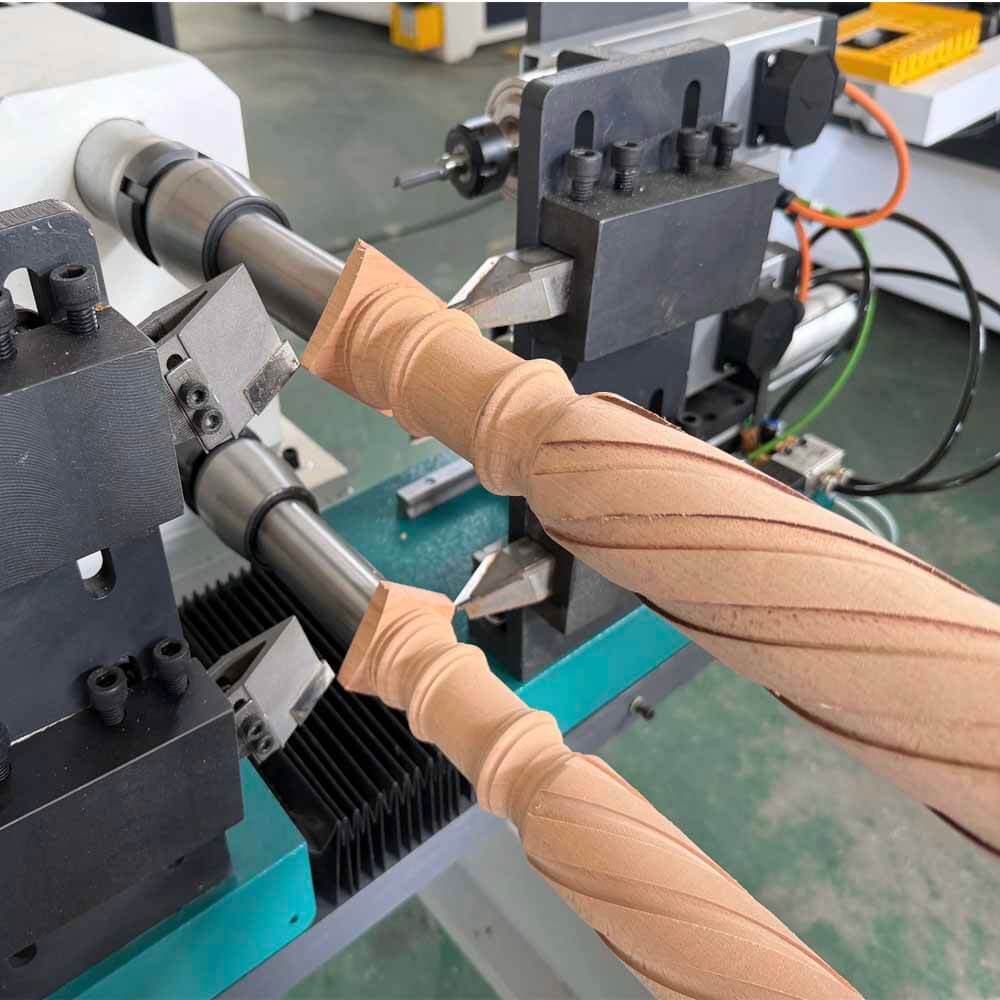
How Does a CNC Wood Turning Machine Work?
Step-by-Step Process Explained for Manufacturers
Understanding the working process helps manufacturers evaluate whether CNC wood turning is suitable for their products, production volume, and skill level.
This article explains the complete working principle of a CNC wood turning machine, from programming to finished parts.
Table of Contents
Overview of CNC Wood Turning Machine Operation
A CNC wood turning machine operates by combining:
-
Computer numerical control (CNC system)
-
Rotating spindle
-
Precision cutting tools
-
Automated motion control
Once a program is set, the machine performs wood turning operations automatically with high repeatability and accuracy.
Step 1: Design & CNC Programming
The process starts with product design and programming.
Manufacturers create a turning program based on:
-
Product shape and dimensions
-
Tool paths
-
Cutting depth and speed
The CNC program defines how the machine will move, cut, and finish the workpiece.
Step 2: Material Loading & Clamping
The wood blank is fixed on the machine using:
-
Centers
-
Chucks
-
Automatic clamping systems (for higher automation)
Proper clamping ensures:
-
Stable rotation
-
Reduced vibration
-
Better surface finish
Incorrect setup at this stage can affect final accuracy.
Step 3: Spindle Rotation & Speed Control
The spindle rotates the wood blank at a controlled speed.
Key factors include:
-
Wood material type
-
Workpiece diameter
-
Desired surface quality
CNC systems automatically adjust spindle speed to maintain optimal cutting conditions.
Step 4: Automatic Tool Movement & Cutting
The CNC controller guides the cutting tools along predefined paths.
During this stage, the machine:
-
Controls tool position and depth
-
Maintains consistent cutting pressure
-
Produces smooth and repeatable profiles
Multiple tools can be used in sequence for rough turning and finishing.
Step 5: Finishing & Repeat Production
After one part is completed:
-
The same program is repeated
-
Each workpiece follows identical machining steps
This ensures:
-
Uniform dimensions
-
Stable surface quality
-
High efficiency in batch production
CNC wood turning machines excel in repetitive manufacturing tasks.
How CNC Wood Turning Improves Accuracy & Efficiency
Compared to manual wood turning, CNC machines offer:
-
Controlled tolerances
-
Reduced operator dependency
-
Faster cycle times
-
Lower scrap rates
This makes them ideal for commercial furniture and stair production.
Common CNC Wood Turning Configurations
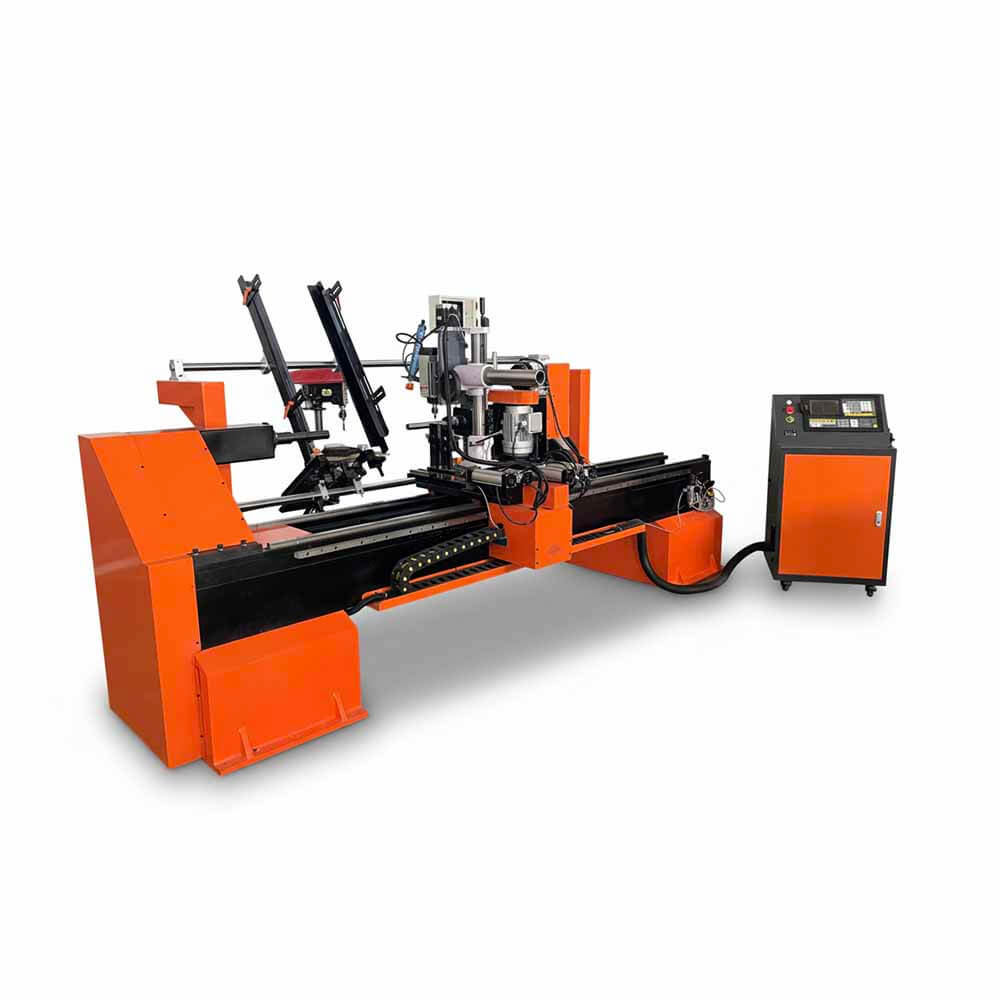
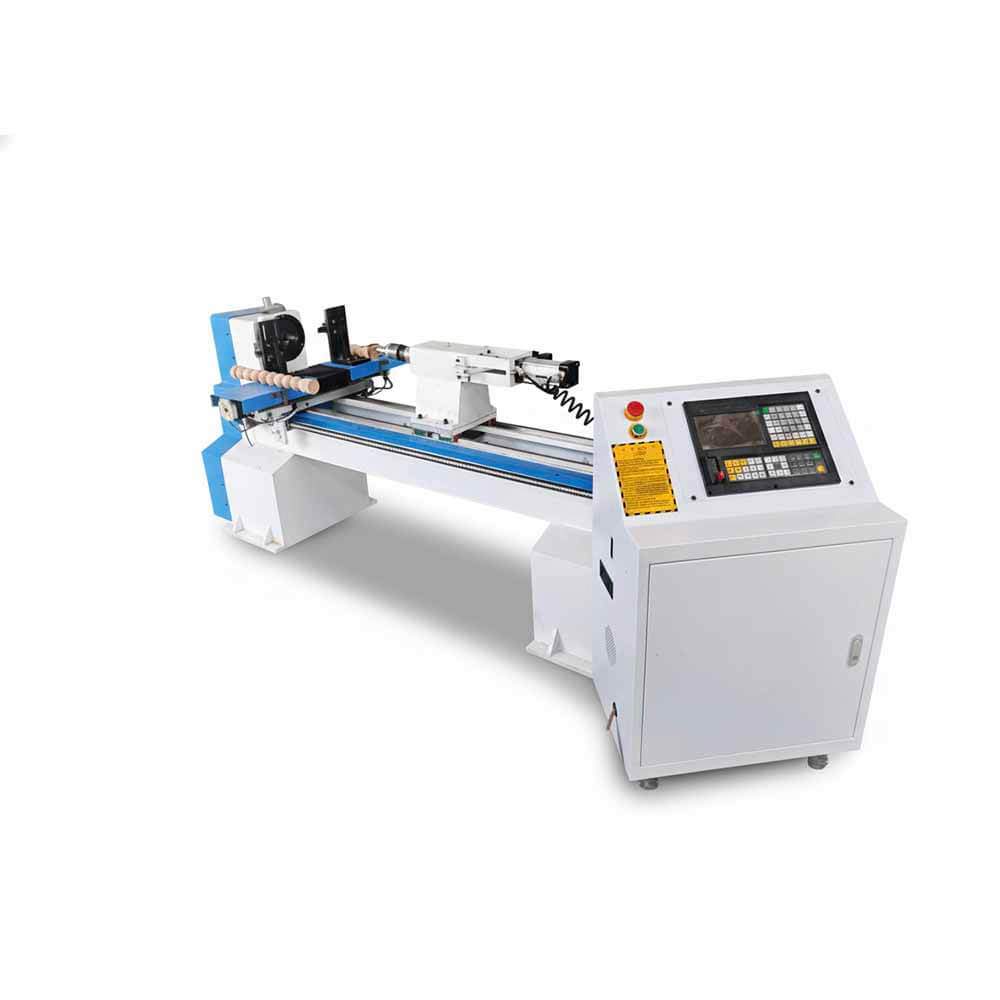
Depending on production needs, CNC wood turning machines may include:
-
2-axis, 3-axis, or 4-axis systems
-
Automatic loading and unloading
-
Multi-tool setups
Higher configurations support complex shapes and increased automation.
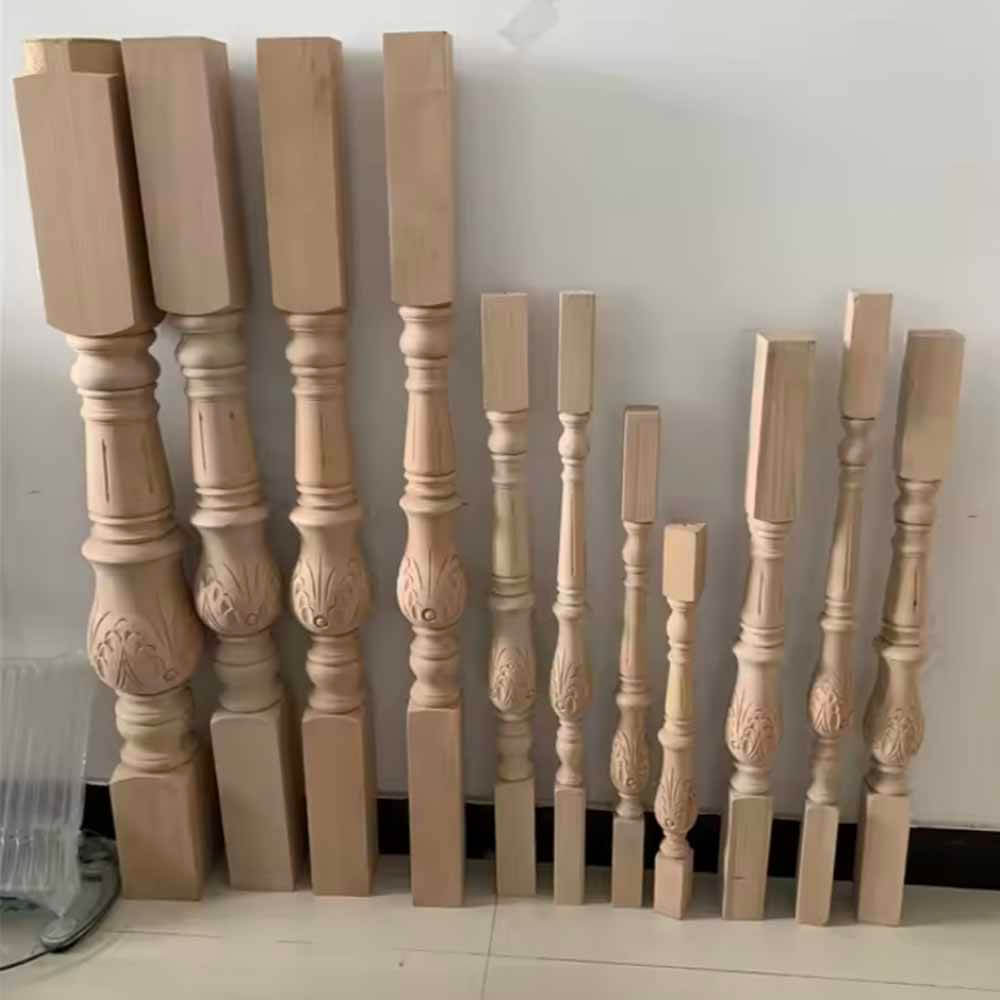
Practical Example: Furniture Leg Production
In furniture manufacturing:
-
A program is created for one leg design
-
Hundreds or thousands of identical legs are produced
-
Minimal variation occurs between parts
This consistency is difficult to achieve with manual turning.
Who Benefits Most from CNC Wood Turning?
CNC wood turning machines are ideal for:
-
Furniture factories
-
Stair and railing manufacturers
-
OEM suppliers
-
Workshops scaling from manual to automated production
They help businesses increase output while maintaining quality.
Conclusion
A CNC wood turning machine works by transforming digital programs into precise mechanical movements that shape wood automatically.
From programming and material loading to cutting and finishing, every step is designed for consistency and efficiency.
Understanding how CNC wood turning works allows buyers to make informed decisions and choose the right machine configuration for their production goals.
Products Categories
- Mini CNC Wood Lathe
- Single Axis CNC Wood Lathe
- Double Axis CNC Wood Lathe
- Three Axis CNC Wood Lathe
- Four Axis CNC Wood Lathe
- Automatic Axis CNC Wood Lathe
Recent News
Why Choose Us
1. Professional CNC Wood Lathe Manufacturer
2. Over 10 Years of Industry Experience
3. Complete Range of Wood Turning Machines
4. Strict Quality Control System
5. Customizable Machine Options
6. Fast Delivery & Adequate Stock
7. Professional Technical Support
8. High Cost-Performance Ratio
9. Global Customers & Market Recognition
10. One-Stop Solution Provider
 EN
EN  IT
IT  KO
KO  JA
JA  AR
AR  EO
EO  PT
PT  FR
FR  DE
DE  RU
RU  AF
AF  AS
AS  AZ
AZ  BG
BG  BS
BS  EL
EL  CS
CS  ES
ES  ES_CL
ES_CL  ET
ET  FA
FA  ID
ID  MS
MS  LV
LV  SK
SK  TT
TT  UZ
UZ  UK
UK  TR
TR  SV
SV  TH
TH